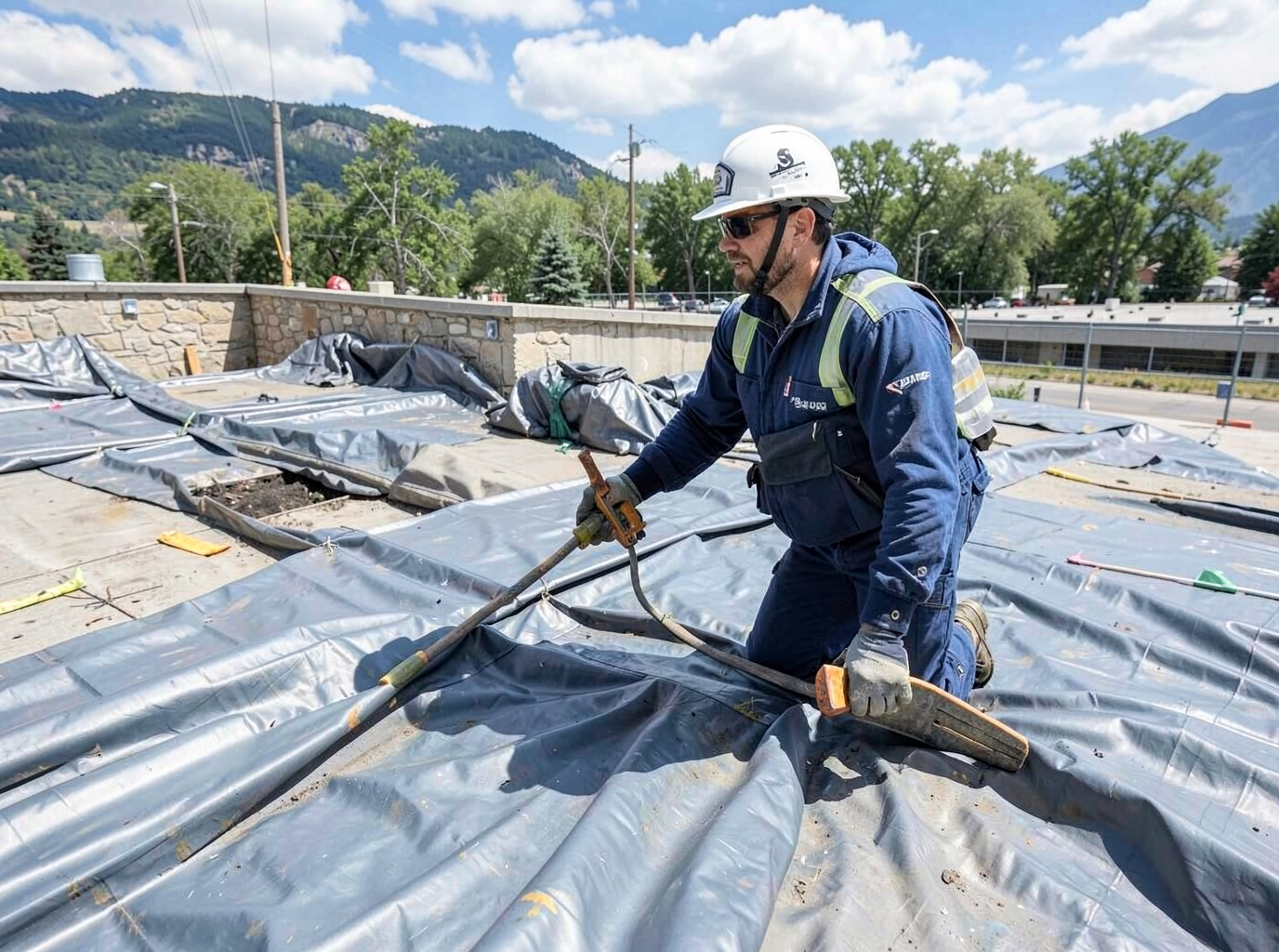
Longmont winters bring heavy snow followed by rapid melt cycles that push water under older asphalt shingles common on homes built before 1970 in Old Town and Kensington. A properly installed tarp must bridge valleys and ridge lines without creating new ponding points, especially on the low-slope additions found behind many Roosevelt Park properties. We use 10-mil reinforced polyethylene rated for 100 mph winds and secure it with 2x4 sleepers and hurricane clips rather than relying solely on furring strips that fail in the gusts that funnel along Left Hand Creek.
Tarping older cedar-shake roofs still present in Sunset requires extra care to avoid crushing brittle shakes under foot traffic or strap tension. We first lay a layer of synthetic underlayment to distribute weight, then overlap the tarp by at least four feet past the leak source and seal the top edge with compatible flashing tape so meltwater cannot migrate behind the patch. Crews working near the Longmont Museum routinely coordinate with the city to keep sidewalk closures minimal during these installs.
Boulder County code requires any temporary covering to remain in place no longer than 90 days without an extension permit. We photograph every installation and provide the homeowner with the exact expiration date plus a recommended permanent repair window before the next snow load arrives. Homeowners in Loveland or Boulder who call after hours are routed to the same Longmont-based crew that already stocks the correct hardware for these neighborhoods.
Technician insight
In Longmont, the thing that catches most people out with Emergency Roof Tarping is the way meltwater from heavy snow on the flat sections behind Old Town additions travels sideways under a loosely secured tarp; we always run the top edge under existing flashing and add sleepers every four feet because the gusts that come down Left Hand Creek will otherwise lift the material within days.
Ice-dam leak on north slope
A Kensington homeowner noticed water staining in the upstairs bedroom after a warm spell following a heavy March snow. We found the leak originating at a valley where an addition met the original roof. A reinforced tarp was installed with sleepers and sealed at the ridge; the homeowner stayed dry through the remaining winter and scheduled full valley replacement the following month.
Emergency Roof Tarping Services We Offer
✓Storm Damage Roof Tarping
Rapid deployment of wind-rated tarps after hail or high-wind events common in semi-arid Longmont summers to prevent interior water damage.
✓Snow Melt Leak Tarping
Targeted coverage over ice-dam and melt-water entry points typical on north-facing roofs in Old Town after heavy Boulder County snowfalls.
✓Temporary Ridge and Valley Covering
Custom-cut tarps sealed along valleys and ridges where water concentrates on the low-pitch additions found behind Roosevelt Park homes.
✓Wind-Lift Prevention Securing
Installation of sleepers and clips designed to withstand Front Range gusts that routinely exceed 60 mph along Left Hand Creek corridors.
✓Historic Home Tarp Installation
Gentle, non-penetrating methods for pre-1950 cedar and slate roofs still standing in Downtown Longmont and Kensington.
Emergency Roof Tarping Cost in Longmont, CO
| Service | Typical Range | What Affects It |
|---|---|---|
| Basic single-slope tarp under 200 sq ft | $350–$550 | Most common on ranch homes in Sunset; price rises with two-story access |
| Complex valley or ridge tarp | $550–$850 | Required on many Old Town Victorians with multiple roof planes |
| Historic cedar or slate protection layer | $450–$700 | Includes non-penetrating fasteners and extra underlayment |
| After-hours or weekend emergency response | $150–$250 added | Covers call-out outside normal hours in Longmont or nearby Loveland |
Ranges are typical for Longmont, CO and confirmed with an exact written quote before any work starts.
How it works
- 1
On-Site Leak Assessment
We inspect from the attic and roof to locate active water paths, noting roof pitch, covering type, and proximity to trees or chimneys.
- 2
Tarp Material Selection
Choose reinforced polyethylene sized to extend four feet past the damaged section and rated for local wind and snow loads.
- 3
Secure Installation
Lay underlayment, position tarp with correct overlap, then fasten with sleepers and clips avoiding damage to historic roofing materials.
- 4
Documentation And Timeline
Photograph the finished tarp, note permit expiration, and schedule follow-up for permanent repair before the next weather cycle.
Pricing
Upfront quotes after inspection; final cost depends on roof access, pitch, and square footage of coverage needed.