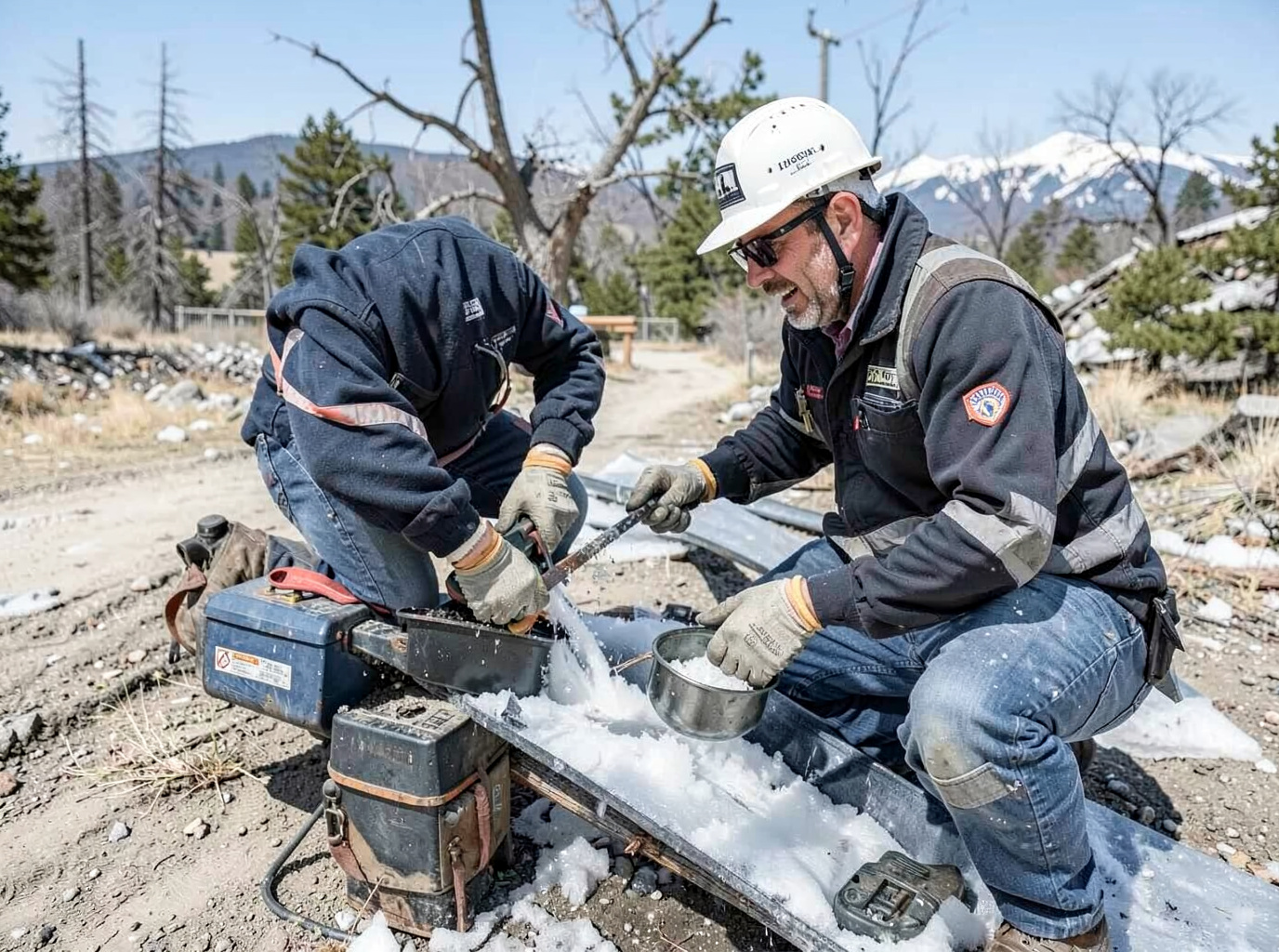
Longmont's semi-arid climate brings cold snowy winters that cause ice dams along eaves, especially on homes in Old Town and Sunset neighborhoods where many roofs date to the 1940s through 1970s. These dams form when attic heat melts snow that refreezes at the gutter line, forcing water under shingles and into attics. Older rafter construction with limited insulation allows warm air to escape unevenly, turning routine snow into repeated leak events near Left Hand Creek properties where moisture lingers.
Mechanical removal requires care on asphalt shingles common throughout Kensington and Downtown Longmont to avoid granule loss or membrane damage. We use roof rakes and steam wands from the ground or with proper fall protection rather than hammers or chemicals that void warranties. Once cleared, we check flashing at valleys and chimneys because Boulder County wind patterns often drive meltwater into those seams during the next warm spell.
Prevention focuses on improving attic airflow and sealing bypasses around recessed lights and plumbing stacks. Adding ridge and soffit vents helps equalize temperatures across the roof deck in homes near Roosevelt Park where tree cover reduces natural drying. Heat cables installed along eaves provide targeted melting paths without raising overall energy use when controlled by moisture sensors.
We also clear gutters and downspouts that fill with packed snow and ice, a frequent issue on one-story ranches in the area. Standing water in gutters extends the dam upward and increases pressure at the roof edge. Proper drainage reduces the volume of water that can back up under the first course of shingles during rapid melt.
Technician insight
In Longmont, the thing that catches most people out with Ice Dam Removal & Prevention is how homes in Old Town and Kensington often have single-layer insulation and blocked soffits that trap heat right at the eaves, so even a modest snow load turns into repeated dams. Adding cables without fixing the ventilation first just moves the problem farther up the roof.
Old Town Bungalow Ice Dam Leak
Heavy snow followed by a warm spell caused water to enter the attic of a 1950s bungalow near Roosevelt Park. We found ice extending eight feet up the north slope where soffit vents were blocked by insulation. After clearing the dam and installing heat cable along the eaves, we opened the soffits and added baffles. No further leaks appeared during the remaining winter storms.
Ice Dam Removal & Prevention Services We Offer
✓Ice Dam Assessment and Inspection
On-site evaluation of roof slope, insulation levels, and ventilation to locate active dams and hidden moisture in Longmont attics.
✓Mechanical Ice Dam Removal
Ground-based raking and controlled steam application to clear ice without damaging shingles on homes in Old Town and Downtown Longmont.
✓Heat Cable Installation
Self-regulating cables placed along eaves and valleys to create melt channels during freeze-thaw cycles common in Boulder County winters.
✓Attic Ventilation Upgrades
Adding ridge vents and baffles to reduce heat buildup that drives ice dam formation on older Longmont roof decks.
✓Gutter and Downspout De-icing
Clearing packed ice from gutters and installing guards to prevent water backup along roof edges in neighborhoods like Kensington.
Ice Dam Removal & Prevention Cost in Longmont, CO
| Service | Typical Range | What Affects It |
|---|---|---|
| Ice Dam Removal Visit | $250–$550 | Varies with roof height and extent of ice coverage |
| Heat Cable Installation | $400–$900 | Depends on linear feet along eaves and valleys |
| Attic Ventilation Assessment | $150–$300 | Includes inspection and basic baffle adjustments |
| Gutter Clearing Add-on | $100–$200 | Added during removal when gutters are packed |
Ranges are typical for Longmont, CO and confirmed with an exact written quote before any work starts.
How it works
- 1
Site Inspection
We examine the roof from ground level and attic access points, noting snow depth, dam locations, and any existing ventilation shortfalls.
- 2
Safe Removal
Ice is cleared using non-destructive methods while protecting shingles and checking for active leaks near valleys and penetrations.
- 3
Prevention Work
Heat cables or ventilation improvements are installed based on the home's construction to limit future dam formation.
- 4
Final Check
Attic and exterior are reviewed for remaining moisture and proper drainage before leaving the site.
Pricing
Costs depend on roof pitch, access, and how far ice has extended under shingles.